bountifulbrookline.org – “Second Harvest” sounds like one organization, one website, one hotline. In real life, it’s a shared name used by multiple community food banks in different regions—each running its own programs, partners, and distribution schedules. That’s why searches like second harvest, second harvest food bank, and free food near me can lead to completely different results depending on where you are.
Two of the most searched are the New Orleans-area food bank and the Silicon Valley food bank. They share a mission style, not a single address.
What a food bank actually does (in plain terms)
A food bank is usually the behind-the-scenes hub: it rescues and sources food at scale, then distributes through partner pantries, community sites, and direct programs. Second Harvest of Silicon Valley describes this clearly—connecting smaller nonprofits with a greater variety of food and focusing heavily on “food rescue” across its two-county area.
Think of it as logistics + community networks + consistent distribution—less about one building, more about many access points.
Second Harvest Food Bank New Orleans: who it serves and how people get food
When people search second harvest food bank new orleans, they’re typically looking for the organization officially known as Second Harvest Food Bank of Greater New Orleans and Acadiana. Their primary site (no-hunger.org) emphasizes “Get Help” tools like “Find Food,” senior commodity boxes, and mobile market-style programs.
Feeding America also lists this affiliate and frames it as a lead anti-hunger network for South Louisiana, including food access and disaster response.
If you’re trying to confirm you have the right organization, the quickest check is the official site and its “Find Food / Food Distribution” pages, which describe monthly distribution support across Greater New Orleans, the Bayou Region, Acadiana, and Southwest Louisiana.
Second Harvest of Silicon Valley: what it covers and what “Get Food” looks like
Second Harvest of Silicon Valley serves Santa Clara and San Mateo counties and describes itself as a leading local food rescue organization that moves quality surplus food through a network of partners.
Their “Get Food” page also points readers to CalFresh (California’s SNAP program) support—helping eligible households access an EBT card for groceries.
Feeding America’s directory page lists the organization with its San Jose address and main phone line, which is useful when you need confirmation you’re looking at the official group and not a similarly named nonprofit elsewhere.
Recent reporting has highlighted how high the demand remains in the Bay Area, describing Second Harvest’s scale as serving nearly 500,000 people monthly and operating a large network of distribution sites and partner nonprofits.
“Free food near me”: a practical way to search without getting lost
If your goal is immediate help, don’t start with a general search and hope you land on the right page. Use a short, repeatable process:
-
Use a national or regional directory page (like Feeding America’s locator pages) to confirm the correct local food bank.
-
Go to that food bank’s official “Find Food / Get Food” page for current schedules and partner sites.
-
Check whether the site lists walk-up distributions, drive-thru distributions, or partner pantries (models vary).
-
If you’re unsure, call the official number on the food bank’s contact page rather than relying on third-party listings.
-
Bring basic essentials (bags, a box, and ID if suggested). Requirements vary by program and region, so it’s worth checking the specific distribution listing first.
That’s the cleanest path from “free food near me” to a real, up-to-date distribution option.
What you might receive (and why it changes every time)
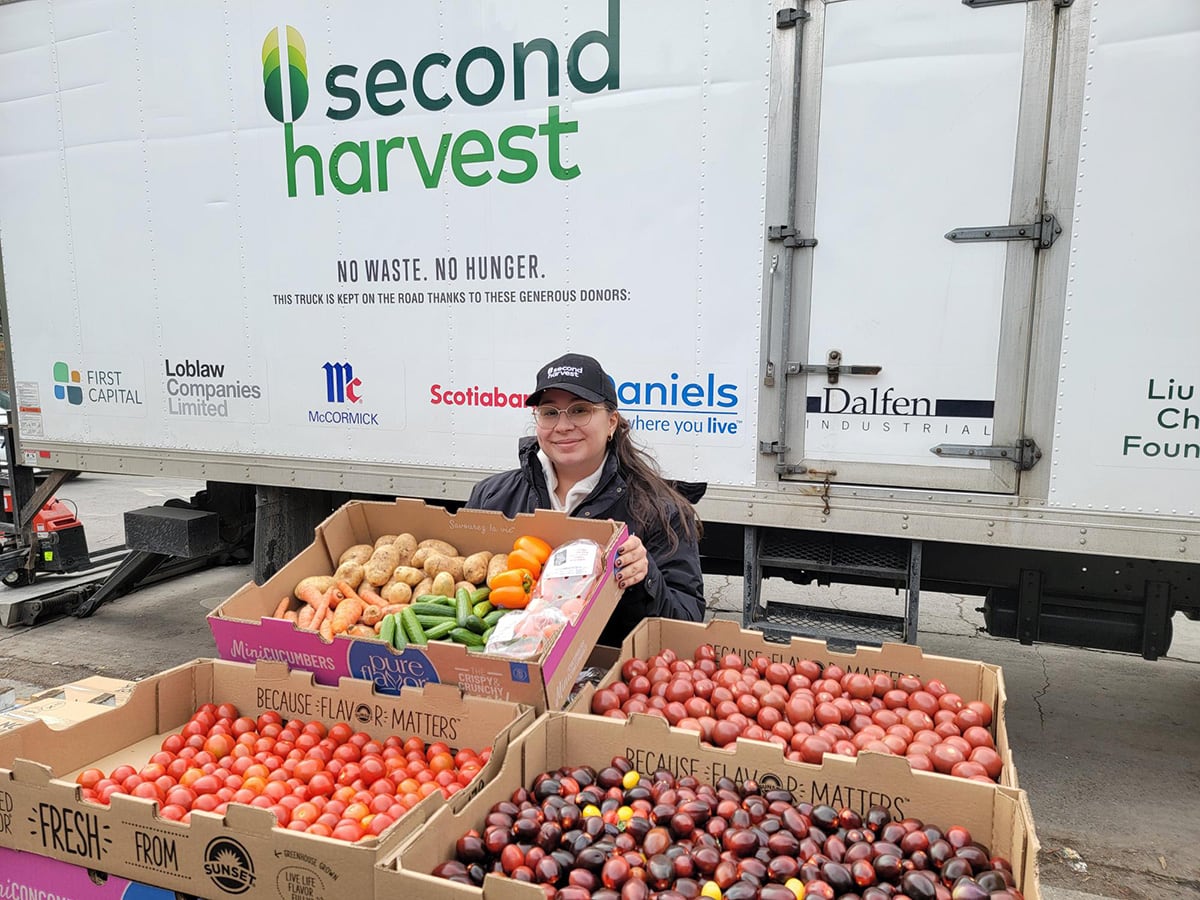
Food bank distributions often include a mix of fresh produce, shelf-stable staples, and sometimes proteins—depending on the week’s donations, rescue pickups, and partner capacity. Reporting on Second Harvest of Silicon Valley, for example, describes distributions featuring fresh produce and essentials at community sites.
And yes—sometimes you’ll see culturally familiar foods. If you grew up with a sweet bread like a concha, it may occasionally appear in a box if a local bakery donates surplus. That’s not guaranteed anywhere; it’s simply how community rescue works: availability follows supply.
A small human detail: the system works because people show up
Most food banks run on a mix of professional operations and volunteer labor. That volunteer layer is not “nice to have”; it’s part of the engine. The Bay Area reporting notes volunteers processing large volumes of food weekly to keep distributions moving.
If you’re donating time, the best move is to start with the official “Volunteer” section of your local Second Harvest—because shifts, age requirements, and tasks differ widely by region.
A quick “rules of go fish” moment, but make it useful
There’s a funny parallel between food distribution and the rules of go fish: you don’t win by guessing wildly—you win by asking the right question in the right place.
In practice, that means: don’t ask the entire internet “Second Harvest?” Ask the correct local organization “Where can I get food this week?” The name is the deck; the local schedule is the hand that matters.
“Second Harvest” points to a mission shared by many food banks, but the details are local. Second Harvest Food Bank New Orleans and Second Harvest of Silicon Valley each run distinct networks, schedules, and support options through their official “Find Food / Get Food” tools. If you’re searching for free food near me, the fastest route is verifying your local food bank via a trusted directory and then using that food bank’s official distribution listings—because the right help is usually closer than it looks.